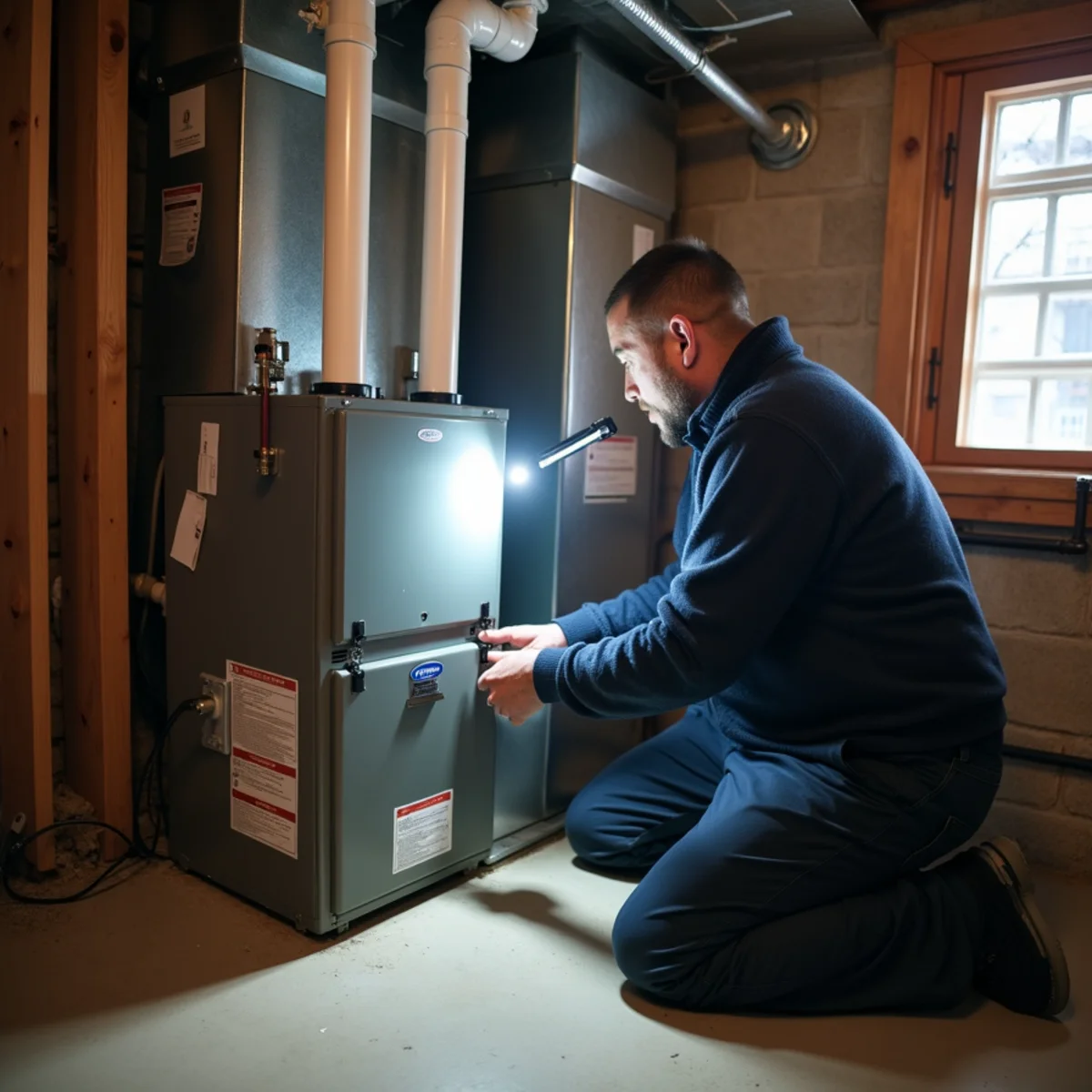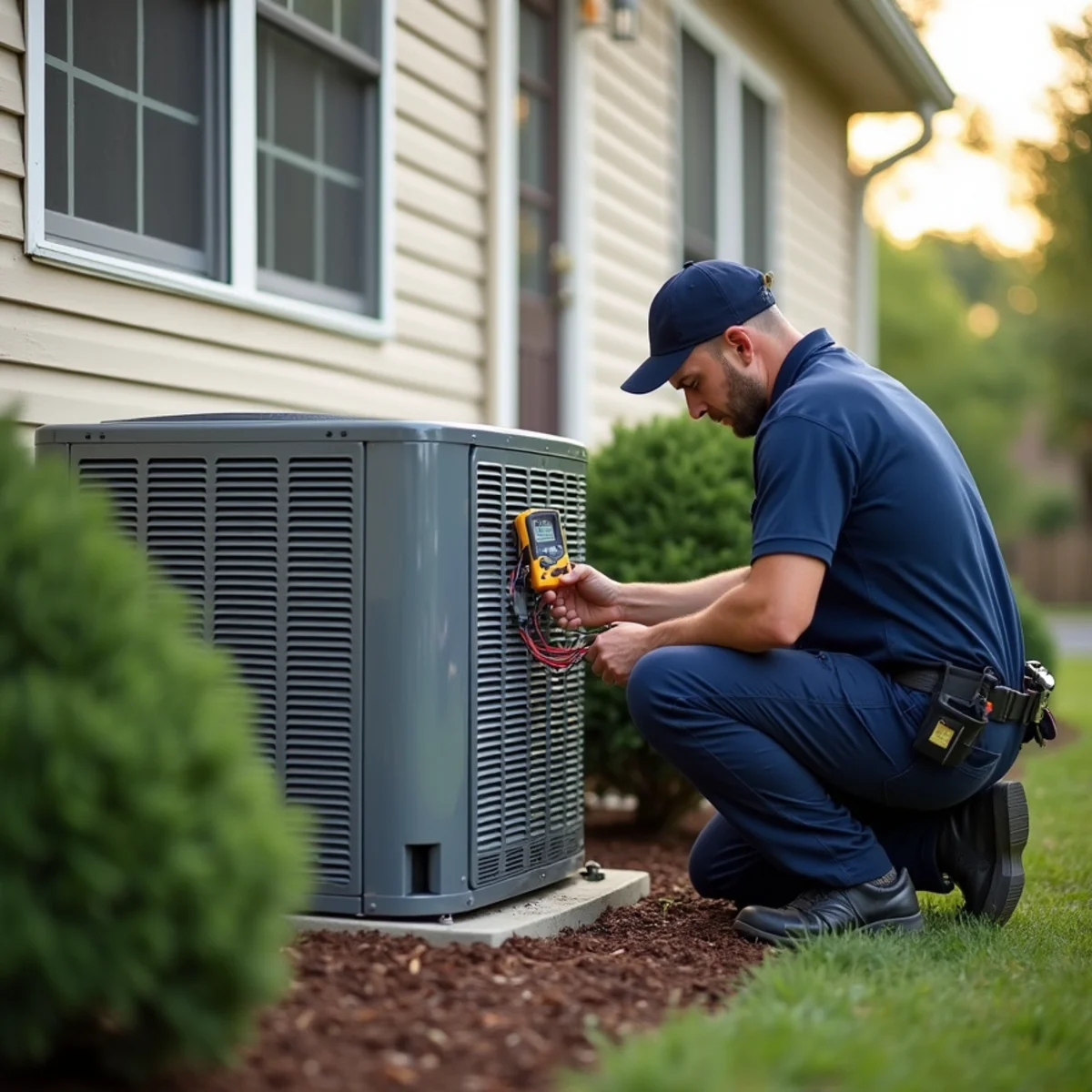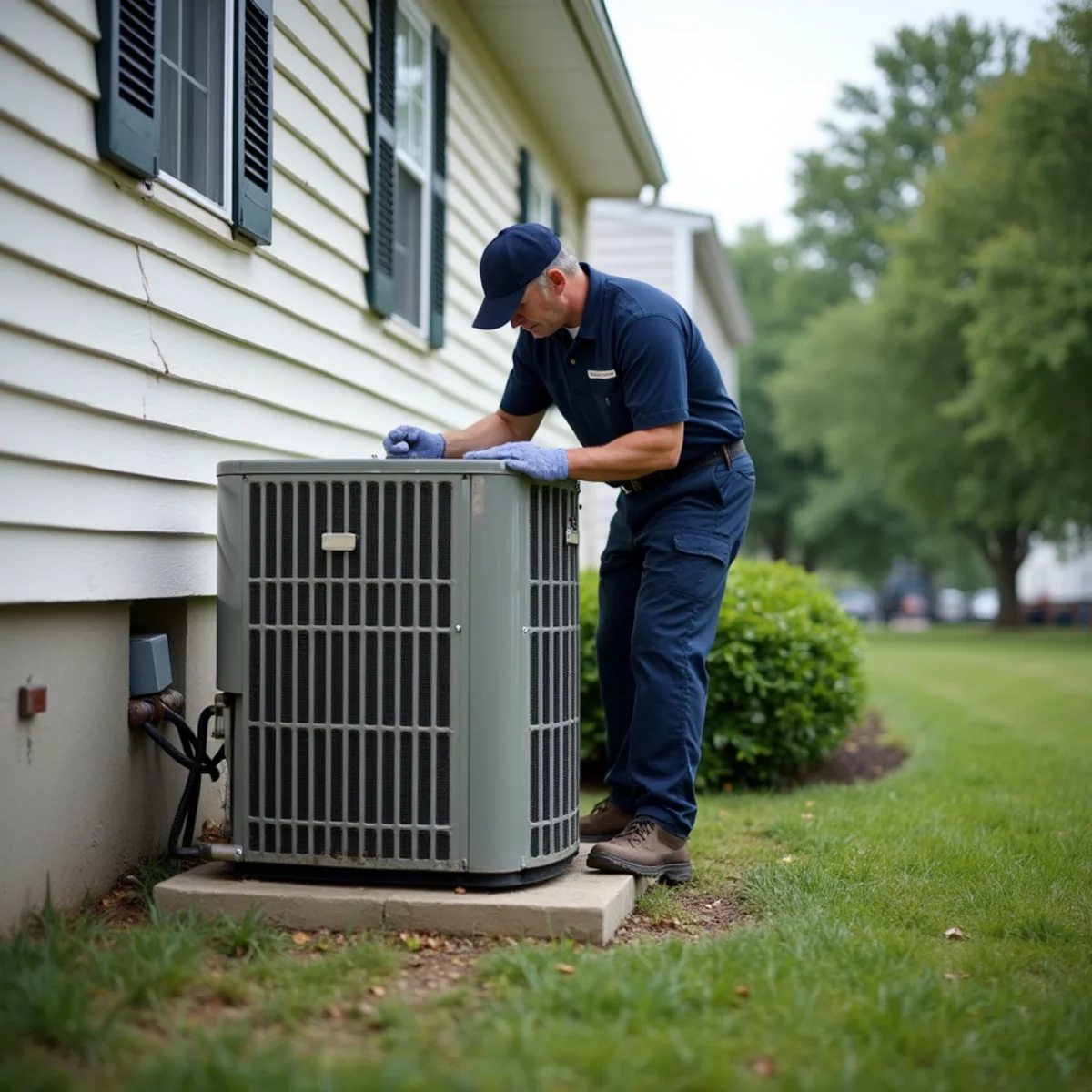
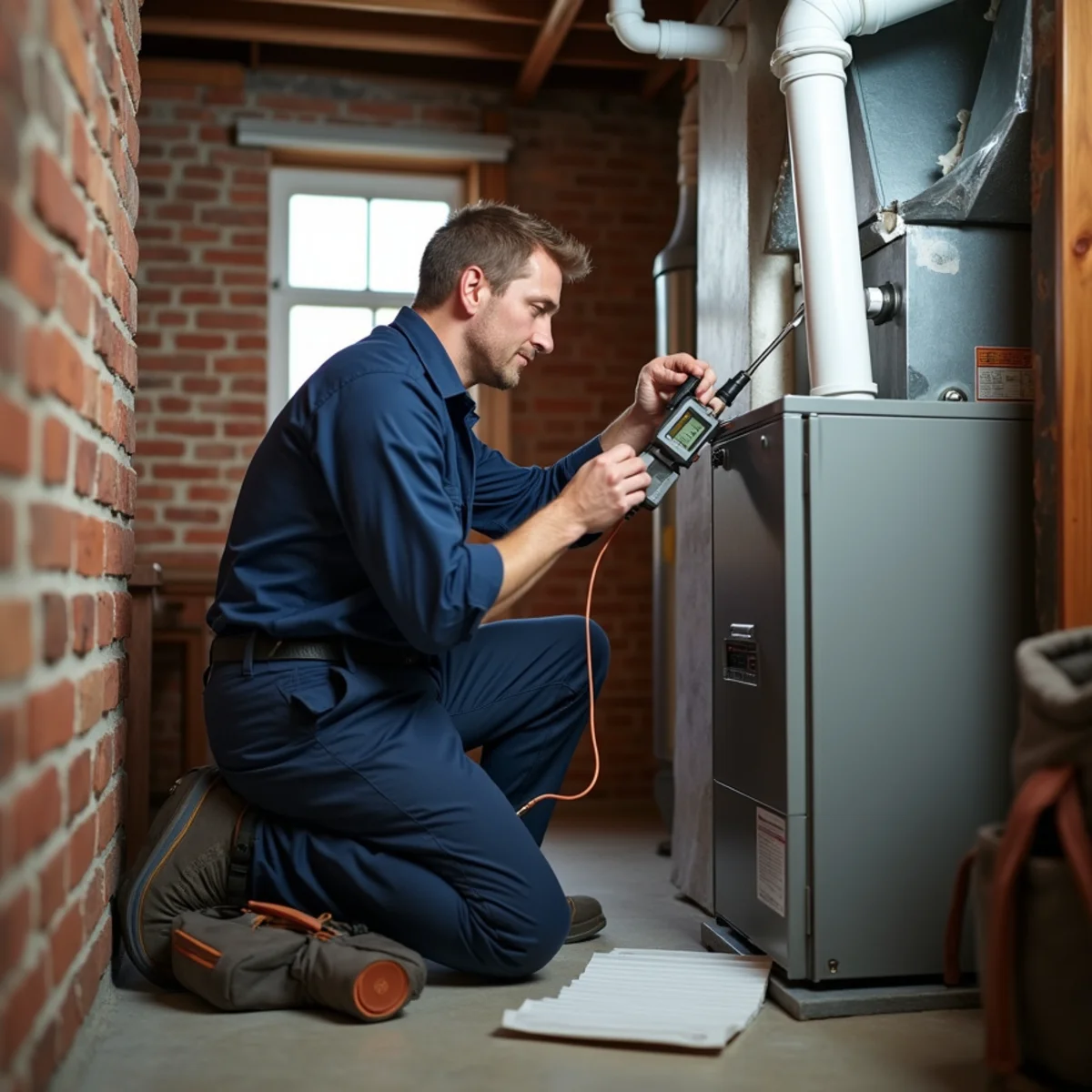
A good furnace tune-up checklist covers the flame sensor, igniter, heat exchanger, combustion and carbon monoxide readings, the inducer motor, the condensate trap, the filter and the venting. A spring AC tune-up covers capacitor readings, the contactor, coil cleaning, refrigerant pressures with superheat and subcooling, the condensate drain and the float switch.
If a visit skips most of those, it was a filter change with a sticker.
Book the furnace in September or October, before the first cold night in the 20s. Book the AC in April or May, before the first humid week in the 90s.
The Fall Furnace Tune-Up, Item by Item
Most Blue Bell homes heat with a gas furnace, and many in Whitpain Township developments from the 1990s and 2000s are on their first or second one. Here is what the technician we send should actually do:
- Flame sensor: pull and clean it. A dirty sensor is the classic cause of a furnace that lights, runs a few seconds and shuts off.
- Igniter: inspect the hot surface igniter for cracks and check its condition with a meter. They tend to fail on the first cold morning.
- Heat exchanger: inspect it for cracks, rust-through and scorching, with a camera where access allows.
- Combustion and CO test: measure combustion in the flue and check for carbon monoxide at the registers and around the furnace.
- Inducer motor and pressure switch: listen for bearing noise, check the draft and confirm the pressure switch proves it.
- Condensate trap and drain: on 90%+ furnaces, clean the trap and confirm the line drains freely.
- Filter: replace it and note the size so you can keep up with it.
- Venting: confirm PVC intake and exhaust terminations are clear and the pipe slopes back correctly, or that a metal flue is intact on an 80% unit.
- Gas pressure, temperature rise, blower and wiring: confirm the furnace runs within the manufacturer's ranges and tighten loose connections.
Why the condensate trap matters in January
High-efficiency furnaces drain water all winter. A trap half full of sludge, or a drain line running along a cold garage wall, can freeze during a single-digit cold snap and lock the furnace out overnight. Cleaning and checking it in October prevents one of the most common January calls.
If the technician finds a worn part, you get the price before any repair is done. Problems that cannot wait go through gas furnace repair.
The Spring AC Tune-Up, Item by Item
- Capacitor readings: measure the run capacitor against its rated value. A weak one fails in the first July heat wave, so catching it in April is the single most useful thing a tune-up does.
- Contactor: inspect for pitted or burned contacts that cause chattering or a stuck-on outdoor unit.
- Coil cleaning: clean the outdoor coil from the inside out and inspect the indoor coil for dirt and corrosion.
- Refrigerant pressures, superheat and subcooling: confirm the charge is right with real measurements. A low charge means a leak to find, not refrigerant to add.
- Condensate drain: flush the line and confirm the pan drains.
- Float switch: lift it to confirm it actually shuts the system off. In attic and closet installs, this is what protects your ceiling.
- Electrical and airflow: check amp draws on the compressor and fan, the temperature split across the coil, and the thermostat.
If the system still runs on R-22, a technician will tell you plainly that refrigerant for it is reclaimed stock only and recharging is costly. Existing R-410A systems can still be serviced and repaired. For anything that is already failing, see central air repair.
What You Can Do Between Visits
- Check the filter monthly during heavy heating and cooling months and replace it when it looks gray.
- Keep two feet clear around the outdoor unit. Trim shrubs and rake out leaves in fall.
- After a snowstorm, clear snow away from the furnace's PVC intake and exhaust pipes on the side of the house.
- Test your carbon monoxide and smoke alarms and replace batteries when the clocks change.
- Keep supply and return registers open and uncovered by rugs and furniture.
- Watch the condensate pump in the basement. If it is running constantly or leaking, call.
Leave equipment panels on. Anything inside the furnace, air handler or outdoor unit belongs to the technician. Our no-heat checklist covers the safe homeowner checks if something stops working anyway.
Heat Pump Owners Need Both Visits
A heat pump runs in both seasons, so it wears like two systems. The fall visit should include a defrost cycle check, auxiliary heat strip amp draws, the reversing valve and the outdoor coil. Townhomes and condos around Blue Bell often have closet air handlers with a float switch in the pan; that switch needs testing too.
If yours steams in winter and blows cool air for a minute, that is usually defrost doing its job. Our post on heat pumps blowing cold air in winter explains how to tell defrost from a fault. Heat pump owners inside Lansdale borough mostly buy power from the borough-owned Lansdale Electric, so PECO efficiency programs may not apply; the Lansdale HVAC service area page has local details.
Boiler and Oil Burner Notes
Hot water boilers: the technician checks system pressure (about 12 to 15 psi cold), the expansion tank, the relief valve, the circulator pump and zone valves. Steam boilers: the sight glass water level, the low-water cutoff and the pressure control. Oil burners need a yearly nozzle, oil filter, electrode adjustment and cad cell check, plus a combustion test.
Fall is the right time for all of it, before the boiler runs daily from November on.
From the field: how to tell a real tune-up from a filter swap
A real tune-up leaves numbers behind. Ask for the readings, and expect to see most of these on the service report:
| Equipment | Readings a real tune-up records | Why it matters |
|---|---|---|
| Gas furnace | Combustion analyzer results (oxygen, carbon monoxide, flue temperature), temperature rise, flame sensor current, gas pressure | Proves the furnace burns cleanly and safely, and catches a weak flame sensor before a January lockout |
| Central AC | Capacitor values against their rating, superheat or subcooling, temperature split, compressor amperage | Catches a failing capacitor in May instead of on the first 95-degree day |
| Heat pump | Both modes tested, defrost cycle forced, auxiliary strip amperage | A heat pump that only gets a cooling check can still fail in the first frost |
| Boiler or oil burner | Combustion test, nozzle and filter changed (oil), low-water cutoff tested (steam), system pressure (hot water) | Prevents soot, lockouts and dry-firing |
| Any system | Static pressure, condensate drain flushed, float switch tested, electrical connections tightened | Airflow and drainage problems cause more breakdowns than worn parts |
If a technician arrives and leaves in 20 minutes with only a new filter, the visit was not a tune-up. You are entitled to ask what was measured.
The bottom line
Book the furnace or boiler in September or October and the air conditioner in April or May, before the first cold snap and the first humid week. Heat pumps need both. Between visits, change filters, keep the outdoor unit clear and test your carbon monoxide alarms. When the technician comes, ask for the readings: they are the proof the visit did its job, and they give the next technician a baseline.
Questions readers ask
How often should I get my furnace tuned up?
Once a year, in early fall, is the standard for a gas furnace. Annual service catches dirty flame sensors, weak igniters, clogged condensate traps and venting problems before the first cold snap, and the combustion and carbon monoxide test is a safety check worth having every year. Oil systems need annual service too, since nozzles and oil filters are wear items. If the furnace is newer and recently installed, ask whether the manufacturer expects yearly service records.
Is a tune-up worth it if my system is working fine?
Usually, yes. Most failures that shut a system down in July or January start as something measurable months earlier: a weak capacitor, a pitted contactor, a slow condensate drain, a sensor that is starting to foul. A tune-up is the chance to catch those on your schedule rather than on the hottest or coldest night of the year. It also gives you a record of readings to compare against next year.
Does my heat pump need a fall and a spring tune-up?
Ideally, yes, because it heats and cools and runs most of the year. If you only book one, a fall visit is the more important one for a heat pump, since winter is when defrost problems, weak auxiliary heat strips and reversing valve issues leave you without heat. The spring visit then focuses on the cooling side: capacitor readings, coil cleaning, refrigerant charge and the condensate drain and float switch.